
Le Flore County Arrest Records and Charges
An arrest record is the account of the arrest itself. It notes who was taken in, the arresting agency, the date, and the booking at the jail. In Le Flore County the Sheriff's Office and city police handle arrests, and the person is booked at the county detention center. That booking side of the story lives with the jail. For the roster, booking detail, and how to confirm custody by phone, see the Le Flore County inmate records page.
The court charge record is a separate thing. After an arrest, the District Attorney reviews the case and decides what to file. The prosecutor may file charges, amend them, or decline the case. Those court charges after arrest are entered with the Court Clerk and tracked through the case as it moves. Oklahoma open records law, found at 51 O.S. § 24A.5, treats most of these court files as public. The full case file, with pleas and the final outcome, sits on the criminal court records page.
Find Le Flore County Arrest Records
Filed charges show up in the state court search systems. The main two are the Oklahoma State Courts Network and On Demand Court Records. Use OSCN to search by case number for the Le Flore County District Court. Use ODCR to search by party name, with Leflore picked as the court. Booking detail itself is not in these court tools. For that side, the jail roster and detention line are the route.
- Open OSCN dockets or the ODCR search page.
- Pick the Le Flore County District Court or the Leflore court option.
- Search by defendant name or by full case number.
- Open the case and read each charge, its statute, its level, and its current status.
The ODCR type-of-case filter is useful here. It lists the criminal categories you may see in a Le Flore County search, including Criminal Felony Proceedings, Criminal Misdemeanor Proceedings, Criminal Probable Cause, and Criminal Proceedings - Not Filed. Picking the right type narrows a name search and helps you spot the charge stage at once.
Older files, sealed files, or paper records may not appear online. For certified copies of a court charge document, the Court Clerk is the source. That office is at 110 Front Street in Poteau, and the phone line is 918-647-3181. Call first to confirm hours and copy fees.
Who Files Le Flore County Charges
The District Attorney files the formal court charges, not the arresting officer. Le Flore County falls under District Attorney District 16, led by Kevin Merritt. The office reviews the arrest, the reports, and the evidence. It then decides whether to file a charge, what level to set, or whether to decline the case. A booking allegation at the jail can differ from what the prosecutor files in court, so the two records do not always match.
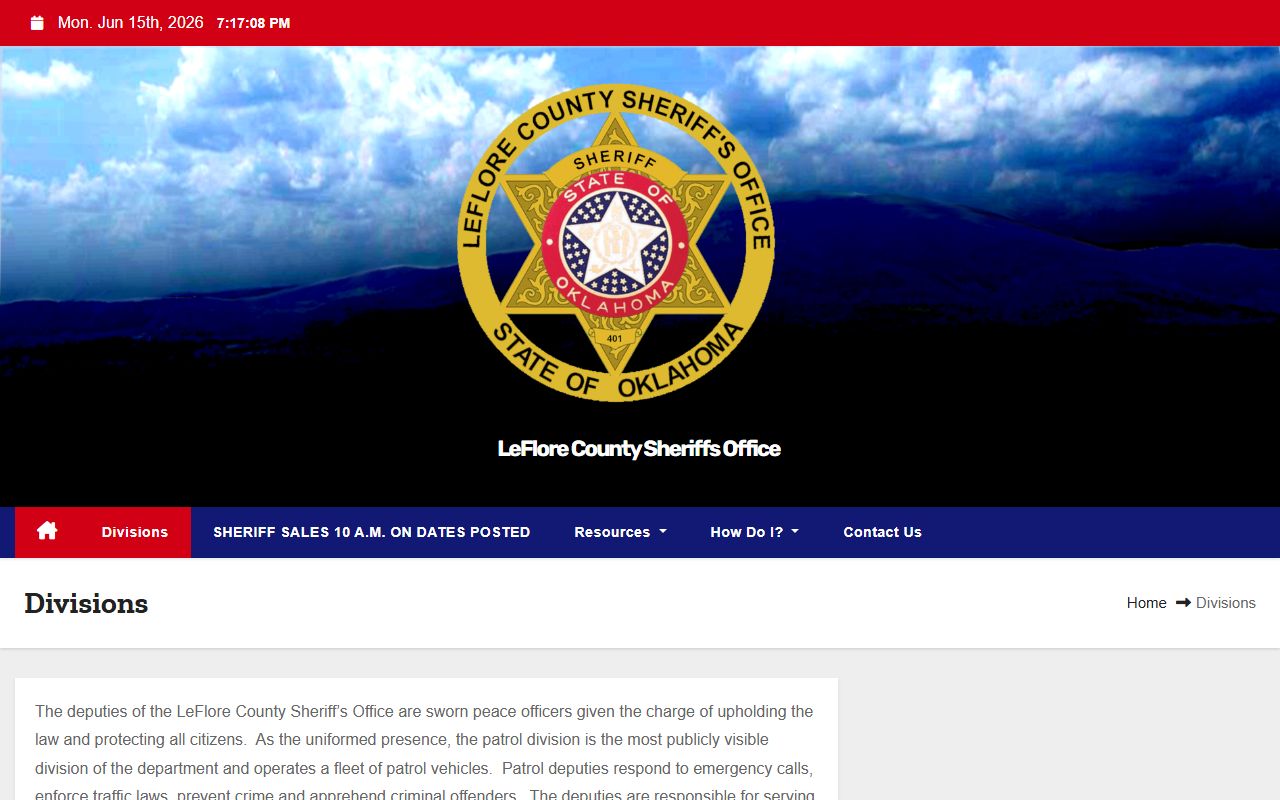
The Sheriff's Office side of an arrest runs through its divisions, and the official Sheriff's divisions page describes patrol, investigations, and warrant-check duties.
The investigation division gathers the case details that the District Attorney later weighs before deciding the court charges. That handoff, from arrest to filed charge, is the heart of the arrest-to-charges pathway. When the office declines a case, no court charge is filed at all, and the matter may show as a not-filed entry rather than an open count. The District Attorney also handles restitution and supervision payments tied to charged cases, so the office is the right place for questions about a filing decision.
How Le Flore County Charges Get Filed
The charge record begins when the prosecutor files a charging document. There are three main types. A complaint often starts a misdemeanor case. An information is the common path for many felonies. An indictment comes from a grand jury and is used for the most serious felonies. Each one opens the case and lists the counts.
| Complaint | Information | Indictment | |
|---|---|---|---|
| Filed By | Officer / Prosecutor | Prosecutor | Grand Jury |
| Common For | Misdemeanors | Many felonies | Serious felonies |
| Starts | The case | The case | The case |
Once filed, the document and its counts are part of the District Court record. The charge then tracks through the case under a single case number. In a felony case, a preliminary hearing tests whether there is enough probable cause for the charge to move forward. The counts, the cited statutes, and the dates all appear on the docket as the case proceeds.
Le Flore County Charge Codes and Levels
Each charge is tied to a state statute and given a level. In Oklahoma the case number prefix signals the type. The level tells you how serious the state treats the count. One arrest can lead to several separate charges, each with its own code and level.
- Felony charges use the prefix CF and cover the most serious offenses.
- Misdemeanor charges use the prefix CM and cover lesser offenses.
- Criminal probable cause matters cover early-stage filings before full charges.
- Not-filed cases mark arrests the District Attorney chose not to charge.
Reading the prefix and the cited statute helps you tell a felony count from a misdemeanor count at a glance.
Le Flore County Charge Status Terms
Charges do not stay frozen. As a case moves, a count can be amended, reduced, added, dropped, or dismissed. The docket shows the current status of each charge. Knowing these terms helps you read a Le Flore County court file correctly.
| Status | What It Means |
|---|---|
| Pending | The charge is filed and the case is open, with no final result yet. |
| Amended / Reduced | The prosecutor changed the charge, often to a lower level. |
| Dismissed | The court dropped the charge, by request or by order. |
| Nolle Prosequi | The prosecutor chose not to pursue the charge further. |
Le Flore County Booking Records
Booking records sit with the Sheriff, not the court. No official online jail roster was found for the county during research, so the detention center line at 918-647-5013 is the most reliable local channel. For a copy of a booking record, an incident report, or jail video, the Sheriff's open records process is the route. State law on law-enforcement records, 51 O.S. § 24A.8, governs much of what the Sheriff can release. You can file through the Sheriff's open records request form. The office is at 100 South Church Street in Poteau, phone 918-647-3426. Posted fees are:
- Plain copies: $0.25 per page.
- Certified copies: $1.00 per page.
- Video or audio on disc: $3.00.
- Video or audio on USB: $8.00.
- Commercial labor: $5.00 per quarter hour.
The older Sheriff's site keeps an open cases and tip page that still lists dispatch contacts and a way to share information.
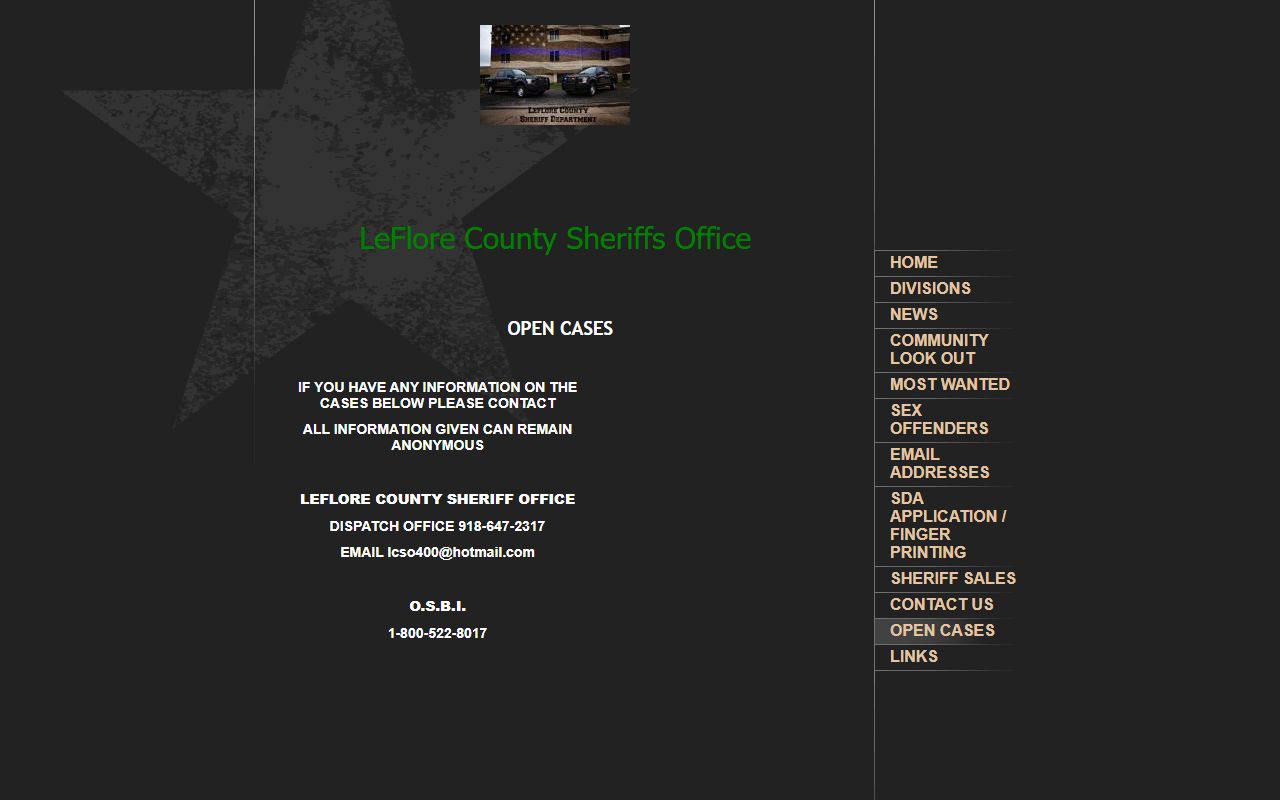
That page also lists the OSBI tip line at 1-800-522-8017, which lets a person pass along case information without giving a name.
Charges vs. Convictions in Le Flore County
Being charged is not the same as being convicted. A charge is an accusation. A conviction is a result reached by plea or by verdict. A person can be charged and later have every count dropped. Both the charge and any conviction are public court records, but they mean very different things.
| Charge | Conviction | |
|---|---|---|
| Stage | Accusation | Verdict or plea |
| Burden of Proof | Probable cause | Beyond reasonable doubt |
| Public Record | Yes | Yes |
When you read a record, check the disposition before you assume an outcome. A pending charge is not proof of guilt.
Sealed vs. Expunged Charge Records
Some charge records can be hidden or erased under Oklahoma law. The two paths are not the same. A sealed record is hidden from the public but still exists. An expunged record is treated as if it never happened. Eligibility for either is set by statute and can be denied even when a person seems to qualify.
- Sealed
- The record is hidden from public view, though some agencies keep limited access.
- Expunged
- The record is destroyed or treated as never having existed for public purposes.
- Eligibility
- Set by 22 O.S. §§ 18, 19, and 991c; the OSBI cannot pre-approve a request, and the state may object.
The OSBI expungement page explains timing and filing, and notes that each county needs its own petition.
Statewide Charge and Criminal History Lookups
Charges filed across the state roll up into a statewide criminal history. The Oklahoma State Bureau of Investigation runs CHIRP, the criminal history record portal, for that purpose. The District Attorney District 16 page links to CHIRP along with case tracking and other tools. You can reach those links through the District Attorney District 16 page.
A statewide search casts a wider net than a single county docket. It can show charges filed in other Oklahoma counties that a Le Flore County search alone would miss. Public access to court files in general flows from the Oklahoma Open Records Act, which keeps most records open unless a law or court order makes them confidential.
Background Check Considerations
There is a difference between a casual lookup and a formal background check. A formal check used for hiring, housing, or credit must follow the federal Fair Credit Reporting Act. A quick name search of court dockets does not meet that standard. Anyone making a decision covered by the FCRA should use a properly regulated screening service.
Important: This site is not a consumer reporting agency under the FCRA, and its information may not be used for hiring, housing, credit, or other regulated decisions.
Restricted Charge Records in Le Flore County
Not every charge record is open to the public. Some are limited by law or held back while a case is active. These limits protect minors, sealed cases, and open investigations. When a record is restricted, an online search may show nothing even when a case exists.
- Juvenile charges, held confidential under 10A O.S. § 1-6-102.
- Sealed or expunged charges under Title 22.
- Declined or not-filed cases the prosecutor chose not to pursue.
- Ongoing investigations not yet charged in court.
If you have a tip about an open matter, the Sheriff offers an anonymous tip form for sharing information.
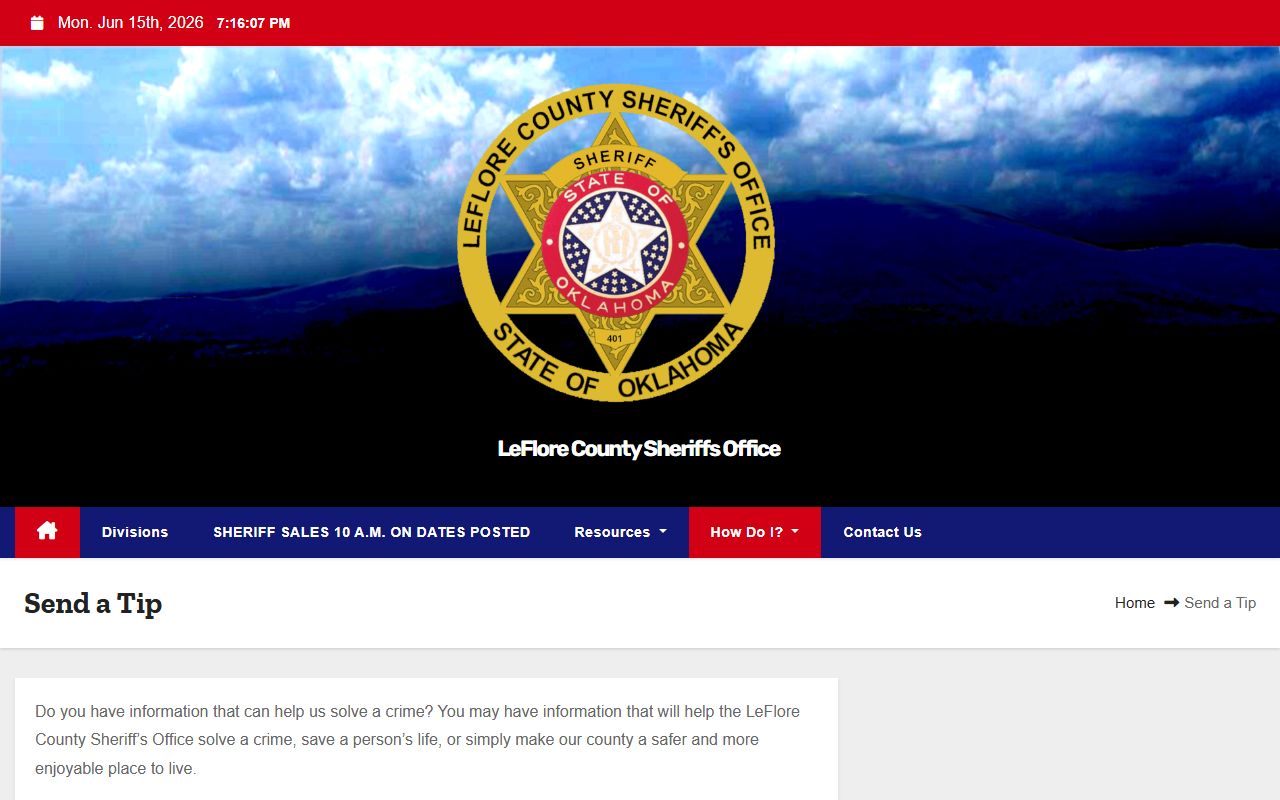
That form lets a person pass along a name, a phone, and a message without being part of the public record themselves.