
What Probate Covers in Le Flore County
Probate is the court process that settles what a person leaves behind. It proves a will, names someone to manage the estate, pays valid debts, and passes property to heirs. When there is no will, the court still steps in to divide the estate by state law. Le Flore County probate records hold the filings from start to finish. They also cover guardianships for minors and adults who cannot manage their own affairs, plus conservatorships and trust matters.
In Le Flore County, probate is not a separate building or a stand-alone court. It is the probate division of the District Court. The same court that hears civil and criminal cases handles estates too. These files carry a PB prefix in the case number. A recent example, PB-2025-00109, opened as the Estate of William Earl Neyman before Judge Fry. Because probate sits inside the District Court, you search it through the same state systems and request copies from the same Court Clerk.
Probate Terms Defined
Probate paperwork uses words you may not meet day to day. A short glossary helps you read a Le Flore County estate file with more confidence. The terms below show up in petitions, orders, and letters across most cases.
- Testator
- The person who made the will. Their wishes guide how the estate is split, as long as the will is valid.
- Executor
- The person named in the will to carry it out. The court confirms this role through letters testamentary.
- Intestate
- Dying with no valid will. The court then divides the estate by Oklahoma's order of heirs.
- Administrator
- The person the court appoints to manage an estate when there is no will or no named executor.
- Guardianship
- A court role that gives one person legal care of a minor or an adult who cannot manage their own needs.
- Conservatorship
- A court role over the money and property of a person who needs help managing assets.
How to Search Le Flore County Probate Records
Two state systems carry Le Flore County probate dockets. The first is OSCN, the Oklahoma State Courts Network. The second is ODCR, On Demand Court Records. Both are free to search. OSCN lets you look up a case by number and pick LeFlore County District Court from a court dropdown. ODCR lets you pick the Leflore court and search by party name or case type. A PB case number speeds either search, but a decedent's name works too.
Gather a few details before you start. The decedent's full name helps. A case number helps more. If you know the file is an estate, choose the probate case type to trim the list. Older or paper-only files may not show online, so the Court Clerk in Poteau is the backup.
- Open OSCN, choose the case-number lookup, and select LeFlore County District Court. Enter the number in PB-year-number form, such as PB-2025-00109.
- No case number? Go to ODCR, pick the Leflore court, and search the party name in Last, First form.
- Set the type of case to Probate Proceedings, Guardianships, or Trust Proceedings to narrow the results.
- Open the matching case to read the docket, then call the Court Clerk at 918-647-3181 for certified copies of any order or letters.
Le Flore County Probate Search Fields
Each system asks for a slightly different set of fields. Most are optional once you have a case number. When you do not, a party name plus the probate case type does the work. The table below lists the fields you will meet on the ODCR and OSCN probate search screens for Le Flore County.
| Field | Type | Required | Notes / Format |
|---|---|---|---|
| ODCR Court | Dropdown | No | Select Leflore from the court list. |
| Party name | Text | No | Search a decedent, petitioner, guardian, or estate party. |
| Type of case | Dropdown | No | Probate Proceedings, Probate Miscellaneous, Guardianships, Conservatorship, Trust Proceedings, or Filing of Wills. |
| Full case number | Text | No | Use PB-year-number when known. |
| OSCN county or court | Dropdown | No | Select LeFlore County District Court. |
| Case number | Text | No | Example style PB-2025-00109. |
The probate case types are the key filter here. They split estates from guardianships, trusts, and will filings. Picking the right one keeps a name search from pulling unrelated cases.
Where Le Flore County Probate Records Are Filed
Probate files live with the Court Clerk, the office that keeps the District Court record stream in Poteau. New estates, guardianships, and trust matters are filed there. The clerk also holds the paper file, the certified copies, and the older records that never went digital. For a stamped order or letters that a bank or court will accept, the clerk is the source. The probate judge shown on a recent sample file is Judge Fry.
Call ahead before you visit. Hours and sealed-file rules can change, and a quick call confirms what to bring. More on this office and its duties sits on the Le Flore County Court Clerk page.
Le Flore County Court Clerk
110 Front St.
Poteau, OK 74953
918-647-3181
Call for current hours
Le Flore County Probate Record Fees
Le Flore County does not publish a local probate fee sheet online. State law still sets the cost of copies. Title 28 of the Oklahoma Statutes, section 31, is the court-clerk fee authority to verify before you order. It sets a per-page copy charge and a certification charge. The table below reflects those statutory amounts.
| Item | Amount |
|---|---|
| First page of a copy | $1.00 |
| Each additional page | $0.50 |
| Certification of a document | $0.50 |
Filing fees for opening a probate or guardianship case are a separate charge and were not posted on a Le Flore-specific page. Confirm the current filing cost and any deposit with the Court Clerk by phone before you file.
Note: The copy amounts above come from 28 O.S. §31 as state authority, so confirm the exact Le Flore County charge with the Court Clerk before you pay.
What Le Flore County Probate Records Show
A probate file grows as the case moves. It opens with a petition or application that asks the court to start the estate. From there the docket fills with notices, the will if one was filed, and the order that admits the will. The court then issues letters testamentary or letters of administration, which name the person in charge.
Later filings track the estate's value and its close. Common entries include an inventory, creditor notices, appraisals, and an accounting. Sale orders show up when real property must be sold. Guardianship and trust filings carry their own petitions and orders. The file ends with a final decree that closes the estate and confirms who receives what.
- Petition or application that opens the estate.
- The will, if one was filed, and the order admitting it.
- Letters testamentary or letters of administration.
- Inventory, appraisals, and creditor notices.
- Accounting, sale orders, and the final decree.
A public docket can expose the case number, the caption, the decedent's name, the judge, and document titles when access is open. Marriage and family files follow a similar pattern, and the Le Flore County marriage and divorce records page covers those.
Le Flore County Small-Estate Affidavits
Not every estate needs a full probate case. Oklahoma allows a small-estate affidavit when the total value of the estate is no more than $50,000. The affidavit can transfer certain personal property, including a vehicle subject to a will, without a long court process. It is a sworn form, not a court order.
This route matters for your search. A small-estate affidavit may not create a full court docket. So a name that returns no probate case in OSCN or ODCR does not always mean the estate was never settled. The family may have used the affidavit instead. When the estate holds real property, has creditor disputes, or names minor heirs, a full probate filing is usually the path, and that filing does create a Le Flore County record.
Le Flore Probate vs Federal Bankruptcy Estates
The word estate has more than one meaning in court. A probate estate settles what a person leaves at death. A bankruptcy estate is the pool of assets in a debtor's federal case, and it has nothing to do with the Le Flore County probate division. People sometimes confuse the two because both involve assets, debts, and a person who manages them. They sit in different court systems.
Le Flore County falls under the U.S. Bankruptcy Court for the Eastern District of Oklahoma, based in Muskogee. Those federal estate files are searched through PACER, not OSCN or ODCR. You can confirm the court's PACER details on the Eastern District bankruptcy lookup.
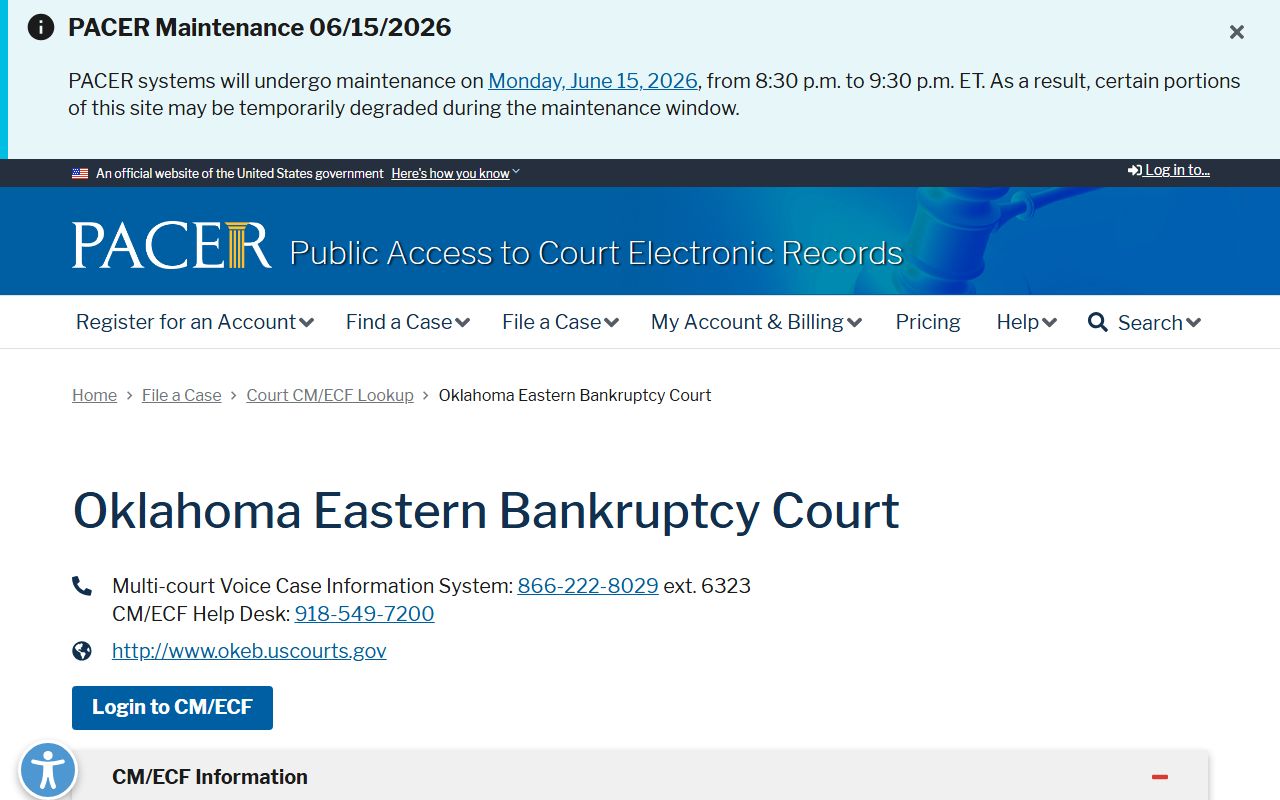
So if you are looking for a deceased person's estate in Le Flore County, stay with the District Court probate systems. Use the federal bankruptcy court and PACER only for a living debtor's case. Matching the right estate to the right court keeps the search clean.
Appeals Beyond Le Flore Probate
Most estates close in the District Court without an appeal. When a probate order is challenged, the path leaves the county. Civil appeals from an Oklahoma District Court go to the Oklahoma Supreme Court, which may send them to the Court of Civil Appeals. A probate dispute is a civil matter, so it follows that civil route, not the criminal one.
Federal appeals from Oklahoma travel a different road to the U.S. Court of Appeals for the Tenth Circuit. That court is rarely the place for a county estate, but its site explains the federal appellate structure that sits above the district and bankruptcy courts.
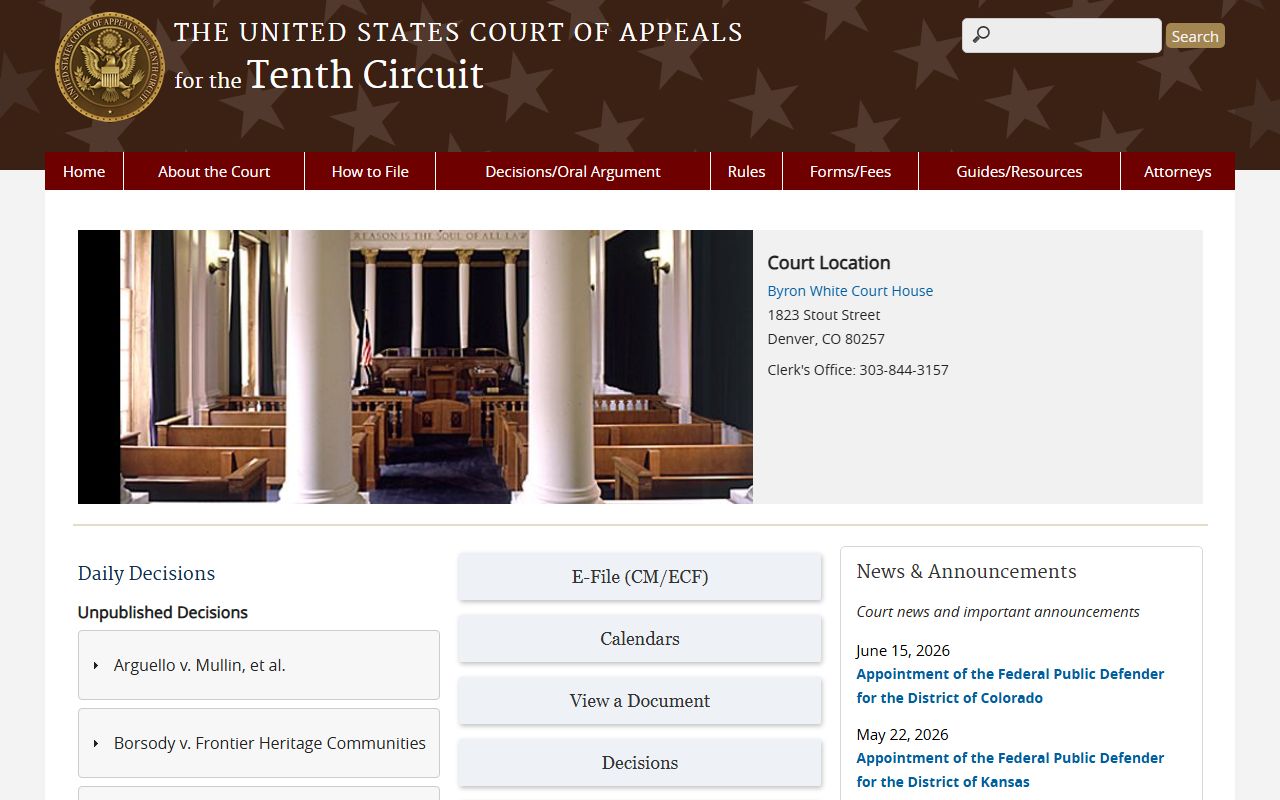
You can read more about that appellate court on the Tenth Circuit site. For day-to-day Le Flore County probate work, though, the active record stays with the District Court and its Court Clerk. Appeals are the exception, not the norm.
Restricted Le Flore County Probate Records
Probate is mostly open, but parts of a file can close. Oklahoma's Open Records Act keeps court records public unless a specific law or order makes them confidential. The general rule sits in 51 O.S. §24A.5. A judge can still seal a document or a whole estate when the law allows it.
Guardianship and conservatorship files raise the most limits. They often involve a minor, an incapacitated adult, or sensitive medical and financial detail. Personal identifiers like Social Security numbers and full birth dates are redacted under Rule 31 of the Rules for District Courts. When a record is sealed or protected, access narrows to the parties, their attorneys, and people the court approves. You can read the state framework on the Open Records Act index.
For anything that does not appear online, the Court Clerk in Poteau is the next stop. Call first to confirm whether a file is open, sealed, or simply stored on paper.