
Warrant Records in Le Flore County
A warrant is a court order. It tells police they may arrest a named person or search a named place. In Le Flore County, a District Court judge signs most criminal and bench warrants, while municipal judges in Poteau and Heavener sign city-level warrants. The Sheriff's Office then serves them. Deputies in the Patrol Division execute arrest warrants and serve civil process across the county.
There is no public, searchable Le Flore County warrant database online. The Sheriff's official site does not post an active-warrant list you can search by name. Because of that, confirming a warrant takes a direct request. The Sheriff's Communications Division runs warrant checks and criminal-record checks for callers. District Court warrants tied to a case can also surface in the state docket systems. Each path has its own steps, and the safest one depends on the kind of warrant you expect.
Most Wanted and Le Flore County Warrants
The Sheriff's Office keeps an official Most Wanted page for the public. You can view it on the county's Le Flore County Most Wanted page.
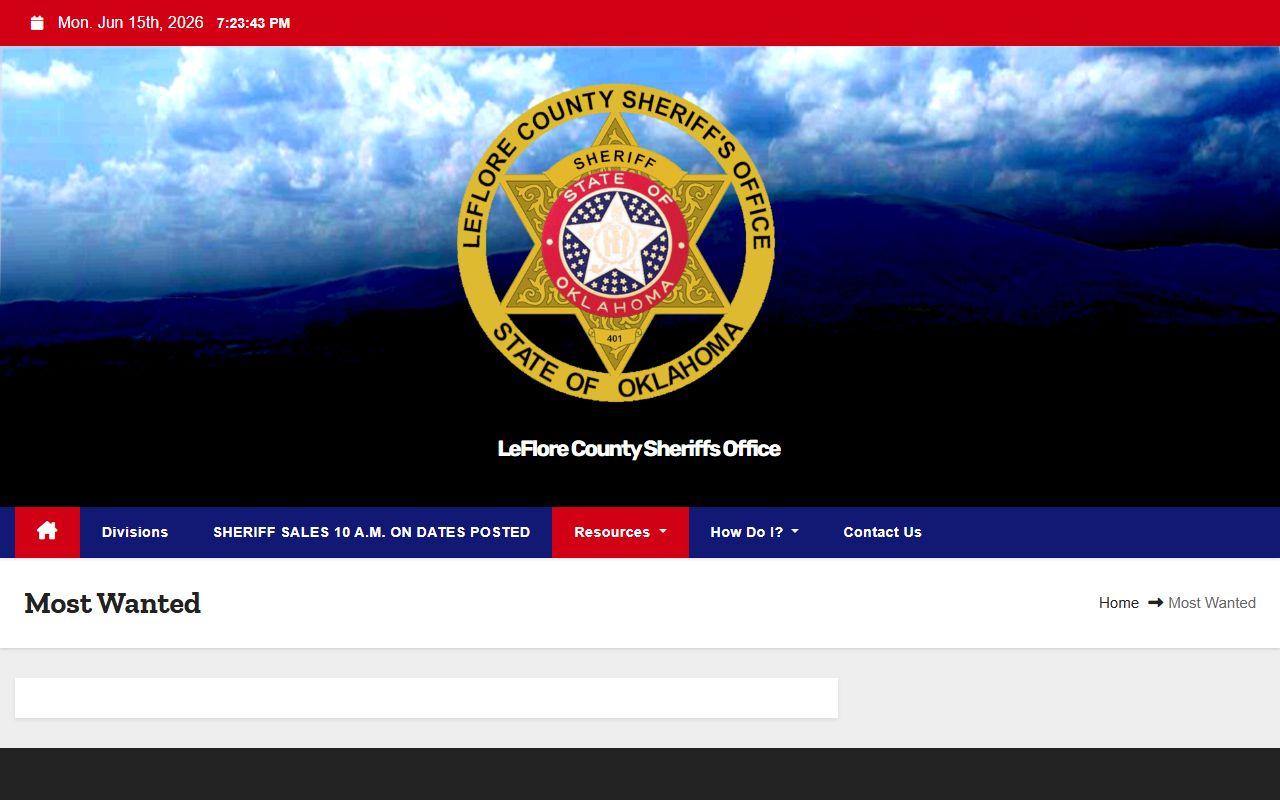
When inspected, the page listed no current entries, yet it remains the official channel the Sheriff uses to publish people wanted in the county. A Most Wanted list is not a full warrant database. It shows only the cases the Sheriff chooses to publicize, so an empty page does not mean no warrants exist. Anyone listed should be handled as the Sheriff asks, and tips can be passed through the office rather than approached in person. For people already booked, the jail roster and Le Flore County inmate records may show current custody status instead.
How to Check for a Le Flore County Warrant
Checking for a warrant in Le Flore County runs through several offices, not one portal. Start with the office most likely to hold the record. A criminal or bench warrant from a county case sits with the District Court and the Sheriff. A city citation warrant sits with the municipal court that issued it.
- Call the Sheriff's Communications Division at 918-647-2317, or the Sheriff's Office at 918-647-3426, and ask staff to run a warrant check by name and date of birth.
- Call the Court Clerk at 918-647-3181 for bench warrants tied to a missed District Court date, an unpaid fine, or a case balance.
- Search the case on OSCN or on ODCR to see whether a warrant was entered on a District Court case.
- For a city ticket, call Poteau City Hall at 918-647-4191 or Heavener Municipal Court at 918-653-2011, since municipal warrants are separate from District Court.
- File a written open-records request with the Sheriff for warrant documents that are not posted online.
Note: paying a fine online does not automatically recall a warrant, so call the Court Clerk after any payment to confirm the warrant is cleared.
Sheriff Contacts for Le Flore County Warrants
The Sheriff's Office sits behind the courthouse in Poteau and is the hub for warrant service in the county. Its Communications Division works around the clock and handles warrant checks, criminal-record checks, and vehicle and property registrations. The Patrol Division serves the warrants once a judge signs them.
Le Flore County Sheriff's Office
100 S. Church Street
Poteau, OK 74953
Office: 918-647-3426
Dispatch: 918-647-2317
Detention Center: 918-647-5013
An older Sheriff's Office website also remains online with mission information and contact links at the legacy Le Flore County Sheriff site.
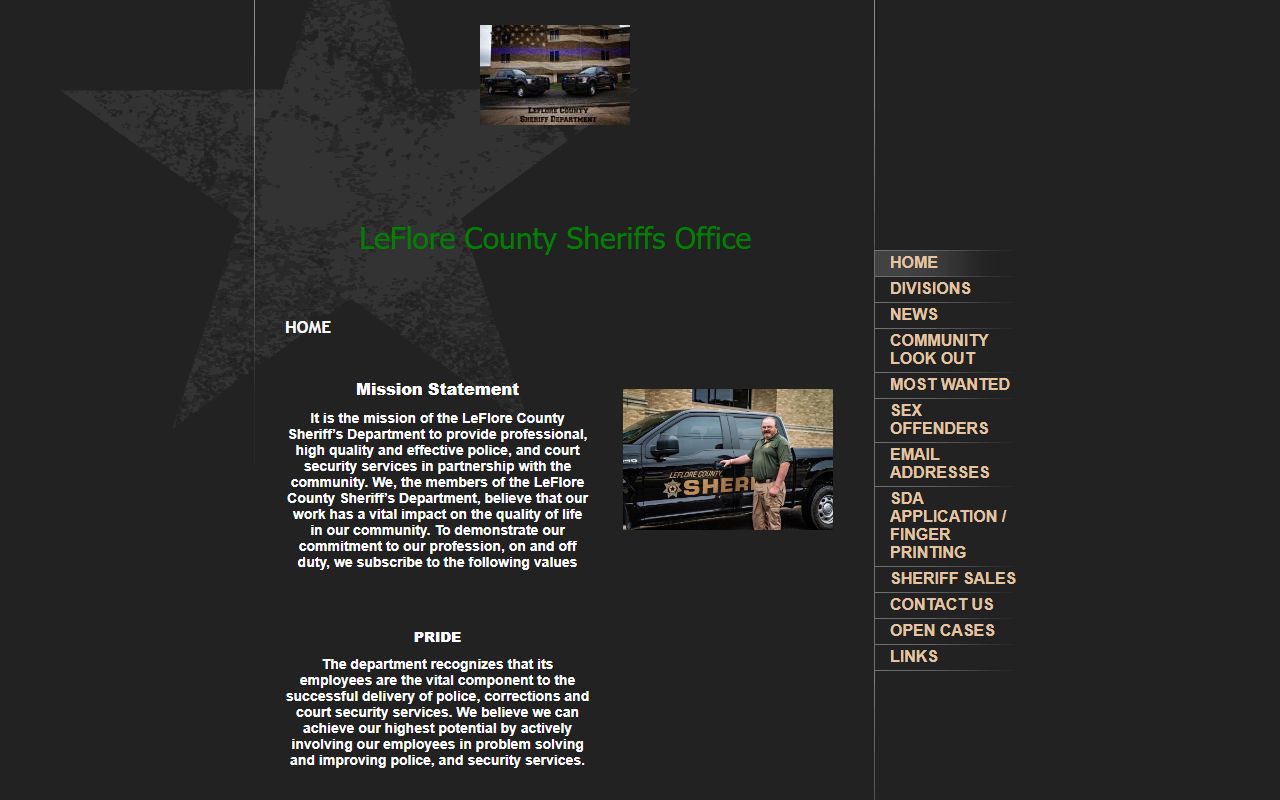
The legacy site can list a dispatch line and mailing details, but the county's current government domain is the more up-to-date source for warrant and records questions. When the two differ, trust the current county site and confirm any phone number before you rely on it.
Types of Warrants in Le Flore County
Not every warrant means the same thing. Some authorize an arrest. Others order a search or follow a missed payment. Knowing the type helps you reach the right office in Le Flore County.
- Arrest warrant - a court order to arrest a person on a criminal charge.
- Bench warrant - issued by a judge for a missed court date, a failure to pay, or contempt.
- Search warrant - a court order allowing a search of a place; ODCR lists Search Warrants as a case type.
- Capias / capias pro fine - process used after a failure to appear or an unpaid fine.
- Detainer or hold - a request to hold a person for another agency, the state, or federal authorities.
- Civil process - papers served in lawsuits and sheriff-sale matters, which are not criminal warrants.
Le Flore County Warrant Search Fields
Because there is no self-service warrant portal here, the "search fields" are the details you give the Sheriff's Communications Division by phone, or the fields you type into the OSCN or ODCR docket lookup to find a bench warrant on a case. The table below shows what each request usually needs.
| Field Label | Type | Required | Notes |
|---|---|---|---|
| Last Name | Text | Yes | Given to the Sheriff's Communications Division, or typed as "Last, First" in OSCN or ODCR. |
| First Name | Text | No | Narrows results when the last name is common. |
| Date of Birth | Date | No | Helps the Sheriff confirm identity on a phone warrant check. |
| Case Number | Text | No | Use the docket lookup, for example a CF, CM, or TR number with year and sequence. |
| County or Court | Dropdown | No | Select LeFlore County District Court in OSCN, or Leflore in ODCR. |
These fields do not return a live active-warrant list on their own. A name and date of birth let the Sheriff run a manual check, while a case number lets the docket systems show whether a warrant was entered on that file.
Sheriff Sales Are Not Criminal Warrants
One official page can confuse warrant searchers. The Sheriff posts upcoming property sales tied to civil court judgments, not criminal warrants. You can view these on the Le Flore County sheriff-sales page.
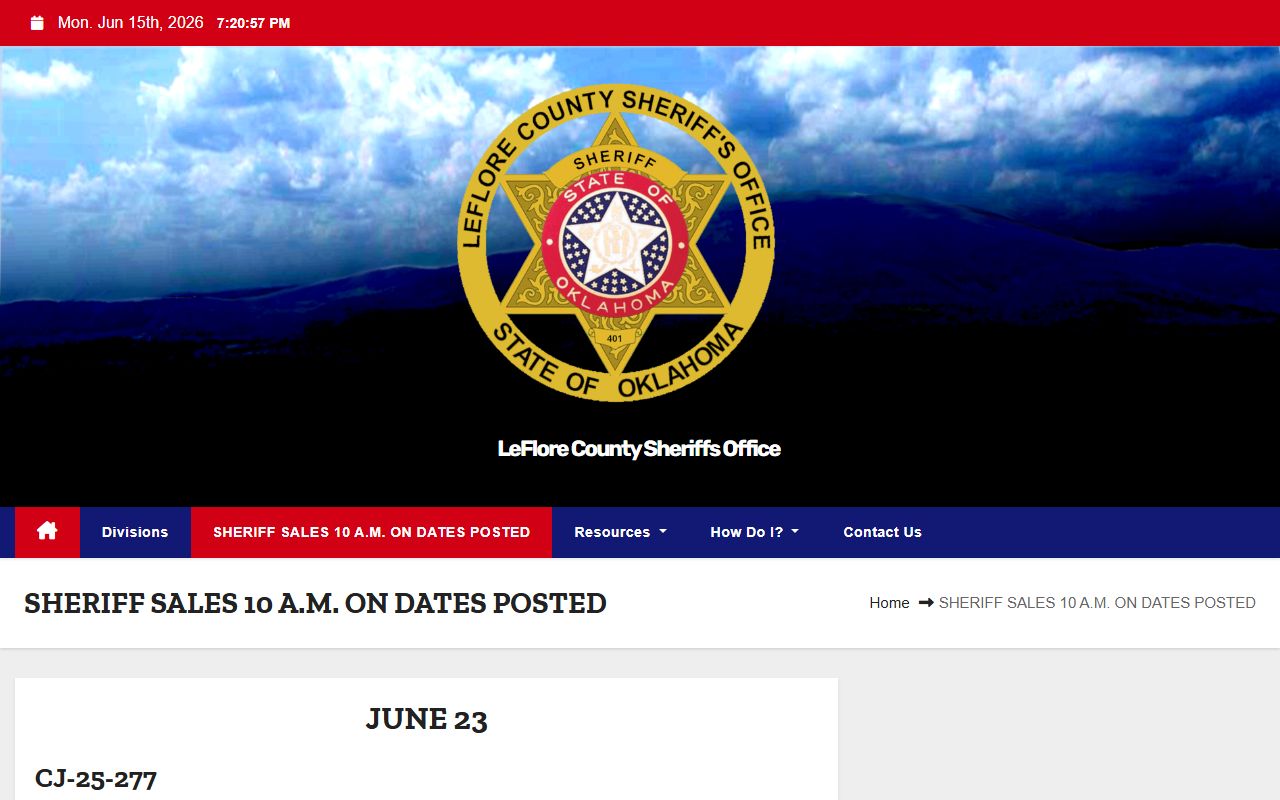
The case numbers on that page carry a CJ prefix, which marks a civil action such as a foreclosure. A CJ number is not a criminal warrant and does not mean a person is wanted for arrest. Criminal and bench warrants move through different case types and different offices, so the sheriff-sale list should never be read as a warrant list.
What a Le Flore County Warrant Record Shows
A warrant record can hold several fields, but not all of them are public or online. Some details live only in the court docket, and some must be confirmed by phone. The table below maps each field to where it tends to appear.
| Field | Source / Visibility | Notes |
|---|---|---|
| Name | Most Wanted page, if published | No current entries were visible on the official page when inspected. |
| Case Number | Court docket or warrant entry | Criminal warrants may use CF, CM, or TR; sheriff-sale CJ numbers are civil. |
| Issuing Court | Court docket | District Court or a municipal court, depending on the case. |
| Charge or Reason | Court docket or warrant entry | May be a charge, a missed appearance, contempt, or unpaid costs. |
| Bond Amount | Court or jail | Not posted in any official Le Flore County warrant database; confirm by phone. |
| Status | Court or Sheriff | Must be confirmed by phone; an online payment does not recall a warrant. |
Bond and status are the two fields people most want, and they are the two least likely to be visible online. There is no official county warrant database that posts a bond amount, so the Court Clerk and the Sheriff remain the reliable sources.
Requesting Le Flore County Warrant Records
When a warrant document is not posted online, a public-records request is the formal way to ask for it. The Sheriff's Office accepts written requests in person or through its open-records request form.
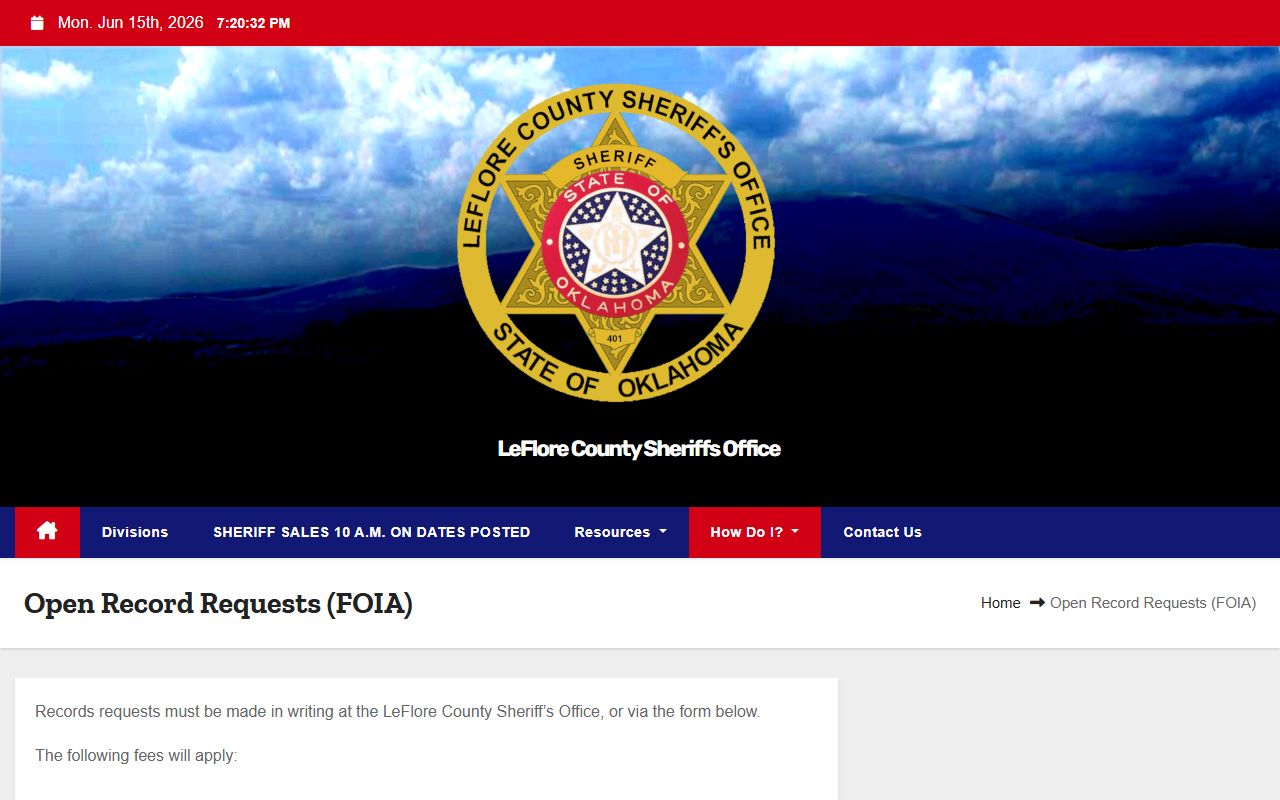
The request asks for your name, phone, email, and a short description of the records you want. Published fees are 25 cents per page, $1.00 per page for certified copies, $3.00 for a disc, $8.00 for a USB drive, and $5.00 per quarter hour of labor on commercial requests. Some warrant material may be withheld while a case is open or where the law makes it confidential. Court case files, as opposed to sheriff records, are requested from the Court Clerk instead.
What to Do If You Have an Outstanding Warrant
An outstanding warrant does not clear on its own. It can lead to an arrest at a traffic stop, at work, or at home, and it can grow more serious over time. The safest first move is to learn the type of warrant and the court behind it. Many bench warrants can be resolved by appearing before the court, posting a bond, or paying what is owed, though paying alone may not lift the warrant. The full case history, charges, and any sentence sit in the Le Flore County criminal court records.
Turning yourself in is sometimes the fastest path to a bond hearing, but timing and venue matter. A lawyer can confirm the warrant, arrange a surrender, and ask the court to set or lower a bond. People who cannot afford counsel may qualify for the Oklahoma Indigent Defense System, which serves the county through a Poteau office.
Important: Talk to a licensed attorney before you turn yourself in on a Le Flore County warrant, since a lawyer can arrange the surrender and request a bond.
Anonymous Tips and Crime Stoppers
Le Flore County does not publish a dedicated local Crime Stoppers line in its official sources. The county does offer official ways to report a wanted person or share information about a crime. The Sheriff's Office hosts a tip form on its website at the send-a-tip page, and the form allows an anonymous submission with optional name, phone, and email.
For a statewide option, the Oklahoma State Bureau of Investigation runs a tip line at 1-800-522-8017. Neither channel is meant for emergencies. Call 911 or Sheriff's dispatch at 918-647-2317 if a crime is in progress or a wanted person is present. A tip is not a warrant check, so use the Sheriff or the Court Clerk to confirm a specific warrant.
Restricted Le Flore County Warrant Records
Not all warrant information is open to the public. A sealed warrant may be hidden while an investigation is active, so officers can act before a suspect is alerted. Juvenile warrants and juvenile case records carry extra confidentiality under Oklahoma law and are not treated like routine adult dockets. Search-warrant returns can stay limited while a case moves forward. Federal warrants do not appear in county or state systems at all, since they run through the United States District Court and federal agencies. When a record is restricted, the Court Clerk or the Sheriff can explain what, if anything, may be released.